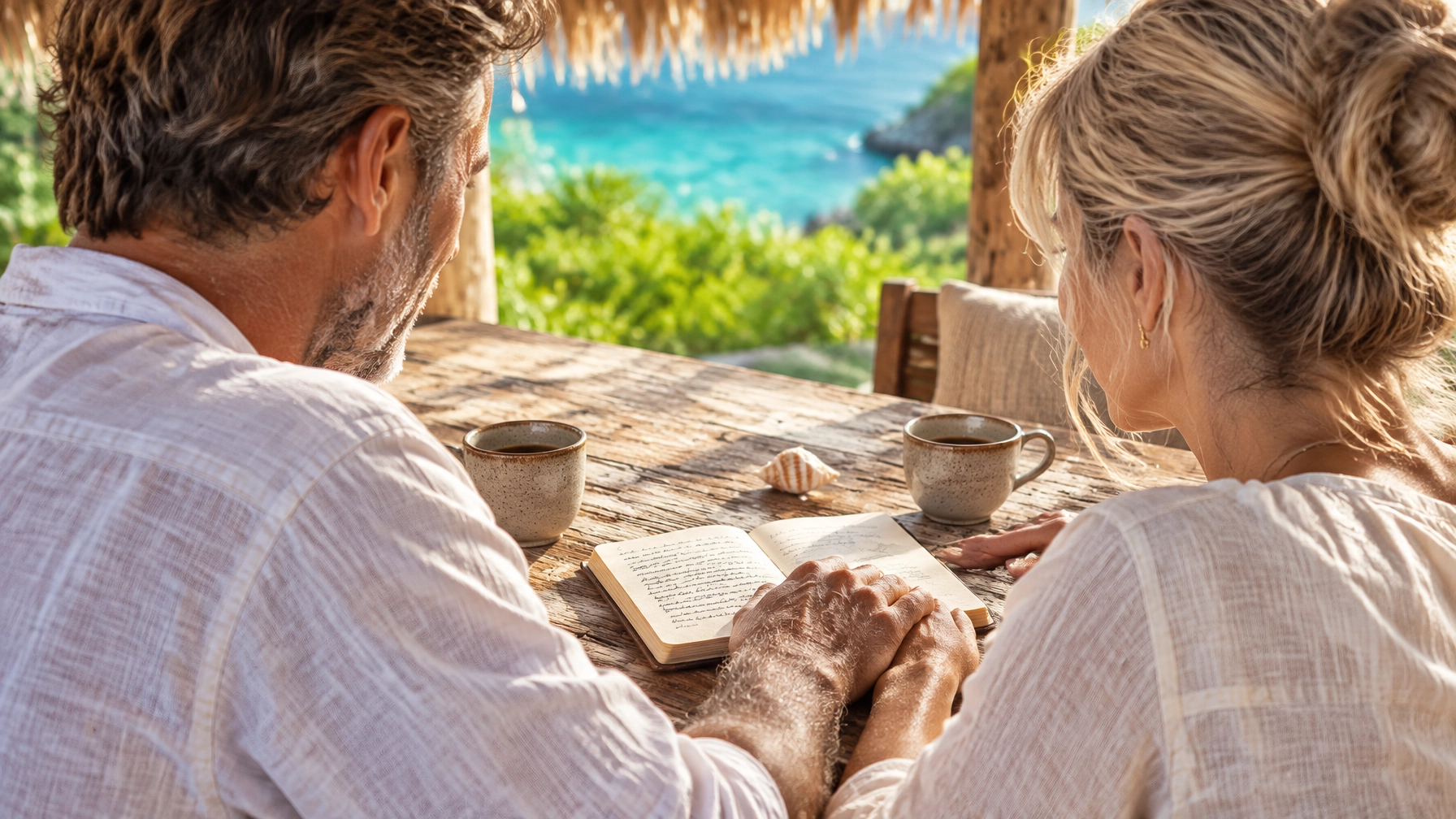
Can a Clothing-Optional Vacation Improve Your Relationship?
A clothing-optional vacation can give couples a meaningful chance to reconnect, but it won’t improve every relationship. Shared naturist experiences may encourage trust through chosen vulnerability, ease some body-image pressure, and make room for memorable new experiences. Those benefits depend on both partners genuinely wanting to try it; nudity is not a cure for existing problems.
Why shared vulnerability can build trust
Trying something unfamiliar together can open the door to honest conversations. One partner might feel curious and excited, while the other feels shy or uncertain. Talking through those reactions, and listening without teasing, persuading, or rushing, can be a valuable shared experience in itself.
In respectful naturist settings, social nudity is nonsexual. The focus is on comfort, personal boundaries, and enjoying the surroundings, not on performing for a partner or anyone else. Choosing to step outside familiar routines can feel vulnerable, but it should be a choice both people make freely. Trust comes from knowing you can be honest about what feels comfortable and that your partner will take your feelings seriously.
It’s worth being realistic about the evidence: research does not show that clothing-optional vacations automatically strengthen romantic relationships. Research on couples’ vacations suggests that shared experiences, such as trying new things and having mindful conversations, can be associated with relationship satisfaction. That doesn’t prove that naturism itself causes closeness. Rather, a naturist vacation for couples may offer an opportunity for those shared experiences if both partners want to be there.
Escaping body-image comparison together
Many people are used to seeing carefully selected images of bodies in advertising and online. In a naturist setting, you may encounter a wider range of everyday bodies instead. For some visitors, that can help shift attention away from comparison and toward simply enjoying the day.
That shift isn’t guaranteed, and one trip won’t resolve deep-seated body-image concerns. A partner who feels exposed or self-conscious needs reassurance and room to decide what works for them, not pressure to “get over it.” A supportive response might be as simple as listening, agreeing on a pace, and reminding each other that nobody needs to look a certain way to belong.

The aim isn’t to assess one another’s bodies or treat nudity as a relationship exercise. It’s to make space for a relaxed, respectful experience in which both partners feel accepted. For a practical introduction to the values behind naturism, see our guide, How to Embrace the Naturist Lifestyle: A Couple’s Guide.
Shared novelty and a break from routine
A trip can feel refreshing when you do something different together and give yourselves time without the usual workday demands. That newness doesn’t need to be dramatic. It might be a conversation that runs longer than usual, an activity neither of you has tried, or an afternoon with no plans at all.
At Playa Sonrisa, the pace can be as active or unhurried as you choose. The resort is a clothing-optional couples retreat on a private beach in Xcalak, with accommodations for up to 14 guests. Guests can enjoy quiet “inactivities,” too, reading in a beach hammock or taking a siesta. These are verified parts of the setting, not a promise that a particular stay will change your relationship.

The small-resort atmosphere may suit couples looking for a quieter alternative to a crowded, highly scheduled holiday. You can explore more about the setting in our article, Why a Naturist Retreat in Mexico Might Be Exactly What You Need Right Now.
When it may not help
A clothing-optional vacation may not feel connecting if one person agrees mainly to avoid disappointing the other. Pressure can turn a new experience into a test: “Will you do this for me?” or “If you love me, you’ll try.” That’s not a good foundation for shared vulnerability.
It also isn’t a substitute for addressing serious relationship difficulties. If you’re dealing with ongoing conflict, broken trust, or significant distress, a vacation may provide a change of scenery, but it won’t resolve those issues on its own. Consider focusing on communication or appropriate professional support rather than expecting a trip to repair the relationship.
If one partner is unsure about naturism, approach the conversation with curiosity instead of persuasion. Our article My Partner Isn’t a Nudist can help couples think through different comfort levels. It’s completely valid to decide that a clothing-optional trip isn’t the right shared experience, or not the right one yet.
How to make it work as a couple
Talk before you book. Ask what interests each of you, what feels intimidating, and what would help you feel comfortable. Discuss practical boundaries as well: how you’ll check in with each other, what you’ll do if one person wants a break, and whether either of you has concerns about social settings. Make it clear that either partner can change their mind.
Then keep the first steps low-pressure. Read about naturism together, share questions, and agree that you don’t need to prove anything. A clothing-optional setting doesn’t mean you have to treat the experience as sexual or performative. Naturism is about respectful, nonsexual social nudity; connection can come from ordinary things like talking, relaxing, and enjoying time side by side.

At a small resort, you may find it easier to choose a quieter rhythm than you would in a large, busy environment. At Playa Sonrisa, the private beach and intimate scale, up to 14 guests, are part of the setting. Whether you spend your time in a hammock, reading, or taking a siesta, the point is to choose what feels right for both of you.
Frequently asked questions
Is a naturist vacation good for a shy partner?
It can be, if the shy partner is genuinely interested and can take things at their own pace. Talk beforehand about what feels comfortable, and don’t treat participation as a requirement or a measure of confidence.
Can nudity help with body image in a relationship?
It may help some people feel less focused on comparison, but it isn’t a guaranteed remedy. Support, patience, and a judgment-free attitude matter more than nudity itself.
Should we try a clothing-optional vacation if our relationship is struggling?
Not as a fix for serious or ongoing problems. A shared trip may provide time together, but it can’t replace honest conversations or professional help when needed.
How do we talk about trying naturism together?
Start by asking what each person thinks and feels, then listen without trying to convince. Discuss boundaries, uncertainties, and the option to pause or decide against the trip.
A clothing-optional vacation might become a meaningful shared experience when both partners are comfortable exploring it. If a quiet couples’ retreat sounds like a fit, explore Playa Sonrisa’s rooms and learn more about our private-beach setting in Xcalak.